Blog: How Women’s History Has Shaped the LA Partnership for Early Childhood Investment
“Everyone’s story and everything we care about takes root in the earliest years.”
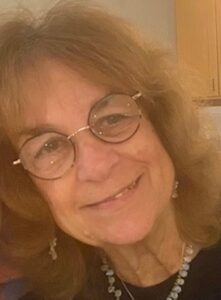
Interview with Janis Minton, Founder & Principal of JMC Philanthropic Advisors (Retired); Trustee, The Deutsch Foundation; Pro Bono Professional Coach
The LA Partnership for Early Childhood Investment began more than 20 years ago with a small but passionate team – including yourself, Richard Atlas and his wife Lezlie, and Cynthia Harding at the LA County Department of Public Health. Can you give us a peek into those early conversations about the need for a new public-private partnership to strengthen funding for LA’s youngest children, and how the LA Partnership came to be?
First, I must say I’m both honored and touched that it’s actually been over 20 years since the partnership began and has grown its amazing and impactful work on behalf of LA’s youngest children.
Richard Atlas was a great partner to me and a dear friend. We innovated many programs together, and I think the LA Partnership was the highlight of our shared work. Back in April 2003, we read a paper by Rob Grunewald and Art Rolnik from the Federal Reserve Bank of Minneapolis with data clearly showing that investing in programs benefiting children in the prenatal period up to age 3 brought the highest rate of return of anything that a city could invest in. We already knew that 80-90% of brain development happens before age 3, and that formative experiences such as stress, nutrition, and caregiver attachment create lifelong outcomes for children.
Around the same time, we also connected with Cynthia Harding and learned that LA County was investing in similar programs – meaning there was a foundation for public and private funders to be partners in this work. Inspired by the potential, we invited Rob and Art to California to meet with a cross-sector group of funders and corporate leaders for a learning session around the potential of investing in early childhood programs.
That session was filled with such warmth and power as the community of funders learned from and related to each other in such a meaningful way. When I asked if they would be interested in meeting again, every single person raised their hand. That’s how the ‘Atlas Gathering’ was started. Our primary goal in that initial year was to educate ourselves on the potential of investing in early childhood development. We heard from early childhood stakeholders, such as Dr. Daniel Siegel, Dr. Alicia Lieberman, Dr. Nadine Burke Harris, and a multitude of nonprofit leaders with strong models and outcomes.
Eventually, a core group of leaders emerged and began to test the waters around jointly funding specific projects. At that point, we formalized what was then called the ‘Early Childhood Partnership’. We hired our first Executive Director, Meredith Blake, and a board of directors was formed. Later on, Gwen Walden and Parker Blackman became executive directors. Today, we are fortunate to have Kaci Patterson and Jacqueline Chun as our co-executive directors.
Can you share a specific moment or decision where you saw women’s leadership perspective shape the direction of the Partnership in a meaningful way – whether in how it was structured, the priorities it pursued, or the way it brought people together?
The ability to prioritize relationships, listening and learning within the Partnership came from a variety of voices in the room, including a lot of women that I respect. At every meeting, we would go around and share: “What have we learned? What’s new? Who from the community should be at the table to better understand how we could leverage our funding? What do we need to challenge in terms of our current thinking so we can do things differently?”
That approach came from a lot of different funders, including many strong women leaders, who were courageous enough to begin taking action together. The agenda at every meeting included the following questions. Let’s keep learning, listening, and questioning. Let’s accept each other’s differences as funders and stakeholders because we can all learn from each other. Everyone is welcome around the table to come and learn and help create change.
How do you think funders can center the needs of women and children in early childhood work while building the broadest possible coalition of support – rather than letting it get siloed as a niche issue?
It’s important to uphold the idea that our strategy in serving LA’s youngest children is not a written document, but a living, breathing decision-making process that adapts to the way that the world is changing. We must have fluidity and flexibility around how we understand the best ways to meet the needs of young children and their families and to capitalize on this proven return on investment.
Witnessing this work evolve over the past 20-25 years, I also see a clear call to action in this current moment to recruit the next generation of leaders who will understand and see the vision of what’s possible by investing in our youngest children. Whether it’s an advisory group or a funders circle of young leaders in their 20s, 30s, and 40s, we must encourage them to take up the mantle and mobilize new technologies, new media, and new perspectives on how to engage communities and relevant stakeholders to move the needle for our most vulnerable families.
What set the trajectory and work of the LA Partnership apart was our focus on what I call “relationship-based giving.” We recognized that to have the greatest impact, we have to blend and bring in different types of funding and different types of people, all working together. It’s impossible to create long-term impact alone. It doesn’t just start with funders, people who have children, or who care about children. It starts with building relationships and guiding people to understand and share what their life was like as a child, how their upbringing influenced their trajectory, and how empathizing with the experiences of people around them is an entry point to spurring change.
That will lead us to a broad coalition of early childhood funders and leaders that come from all walks of life – including funders, policy makers, corporate leaders, nonprofit leaders, parents, LGBTQ individuals, gay and trans families, and more – and have the stamina and passion to carry this work forward. It’s critical to broaden the circle so other voices can advocate for this critical issue.
Women’s History Month is a chance to reflect on the people whose work made today possible. Is there a woman – a mentor, colleague, or figure from history – whose leadership or vision has influenced your own approach to this work?
I have been fortunate to have many mentors in my life, and most of them were women. Before I highlight some of them, I want to say that there is an incredible quality in a man who is in touch with the power of women and brings an openness to the importance of mentoring women. Richard Atlas and I had that kind of relationship. He was, for me, an impactful person who understood why I spent most of my career studying early childhood and saw a light in me and a greater potential than I ever saw in myself. As Father Gregory Boyle said, he really was “God’s heart.” Richard had the same impact on almost everyone he met.
I was also fortunate to know Docia Zavitkovsky, who was a national leader in early childhood development for more than 60 years. She was one of the earliest national influencers in the field of early childhood. She received numerous awards for her work from the National Association for the Education of Young Children and multiple recognitions from the White House Conference on Young Children. We met in a parking lot early in my teaching career. Similarly, she saw a light in me that I could do more than I thought I could. I was a teacher, and she helped me become a principal and ultimately get my Master’s in Family Counseling and in Early Childhood Development. Learning from Docia, I was able to create a therapeutic program at Cedar Sinai Medical Center for at-risk mothers and children. This is where I first met Richard and Lezlie Atlas, which set me on the path to becoming the Executive Director of their family foundation centered on early childhood.
Finally, I want to highlight my children, who I continue to learn so much from. My son, Jonah Minton, an executive in a strategic advisory firm, is an innovator in his field. My joy comes from his powerful engagement as a father and husband. His kindness and compassion as a business leader and parent highlight his strengths to face the challenges in this world. My daughter Sasha Minton trained to be a lawyer, representing parents and children in the child welfare system. After having her own child, she decided to become a legal research librarian at Loyola Law School in Los Angeles. What I admire about her is that she walks her own path, to be courageous, and to be a person who is not intimidated to do what’s right and ethical, especially as we navigate this world with its many challenges.
For me, it’s important to pass on this legacy of deep mentorship and service. Since I retired and sold my philanthropic advising firm, I offer pro bono professional coaching to a limited number of nonprofit leaders who I see making a difference in their communities. I would like to invite others to think about how they can find at least one person to mentor in our field in the way those who came before us did for us.
What gives you the most hope about where early childhood funding is headed – and where do you see the biggest unmet opportunity for funders right now?
Funders must continue seizing the opportunity to work together – whether they’re corporate donors, individual donors, family foundations, or from the public sector. The more people can work together as they do in the LA Partnership, the more impact we can have. Collaboration is multiplication. Shared efforts lead to innovation and greater results.
Listen to each other. Develop relationships in meaningful ways so we can unearth and fund the most strategic things that are evolving in this moment – issues like immigration and racism. How can we tackle them collectively?
I’ll end with a brief story. Richard Atlas and I once met with Richard Riordan, who was Mayor of Los Angeles at the time. Mayor Riordan funded educational programs, but he didn’t quite understand why we placed so much emphasis on funding programs for babies and young children.
We said to him, whether you’re funding cancer, whether you’re funding art, whether you’re helping kids get to college or get jobs, or addressing homelessness, it all begins in the earliest years. If you’re addressing homelessness, you should be thinking about how to address the needs of homeless children and their families. If you’re funding art, you should be thinking about if families have access to play, green spaces, and healthy food. The answers to these questions and the critical windows of development in a child’s earliest years will directly influence the issues you care about down the line. Everyone’s story and everything we care about takes root in the earliest years.
In recognition of the women and men who played such an important role in the early days of the LA Partnership for Early Childhood Investment, Janis wishes to honor and thank the below individuals, some of whom have moved on to different roles:
- Richard and Lezlie Atlas, The Atlas Family Foundation
- Carl and Roberta Deutsch, The Deutsch Foundation
- Wendy Chang, Dwight Stuart Youth Fund
- Steve Hilton, Conrad N. Hilton Foundation
- Angel Roberson Daniels, The Angell Foundation
- Dorothy Fleisher, W.M. Keck Foundation
- Wendy Garen, The Ralph M. Parsons Foundation
- Cynthia Harding, LA County Department of Public Health
- Sam Chan, LA County Department of Mental Health
- Denise McCain Tharnstrom, EveryChild Foundation
- Mindy Jones, The Ahmanson Foundation
- Bill Ahmanson, The Ahmanson Foundation
- Gene and Mindy Stein, Tikun Olam Foundation
- Dr. Bob Ross, The California Endowment
- David Rattray, UNITE-LA
- Mary Kopp, LA Partnership for Early Childhood Investment
- The executive directors of the LA Partnership for Early Childhood Investment: Meredith Blake, Gwen Walden, Parker Blackman, and, currently, Kaci Patterson and Jacqueline Chun
- And many, many more