
Blog: Q&A: Meeting the Needs of Immigrant Communities in East and Downtown LA through High-Quality Mental Health Care
Since 1946, National Mental Health Awareness Month has been observed each May in the United States. To shed light on innovative, community-centered approaches to caring for the mental health and well-being of LA County’s youngest children, the Partnership is excited to share three deep dive interviews with leading early childhood service providers.
Learn how Para Los Niños is providing critical mental health services to children and communities affected by the ongoing immigration crisis in the interview below with Sherry Berg (Director of Clinical Development), Dan Nieman (Vice President of External Affairs), and Jimmy Urizar (Vice President of Student and Community Services).
And, don’t miss the other interviews in this series on a unique program building the capacity of child care providers to offer trauma-informed care with CCALA and culturally tailored mental health care approaches in West and South LA with WIN.
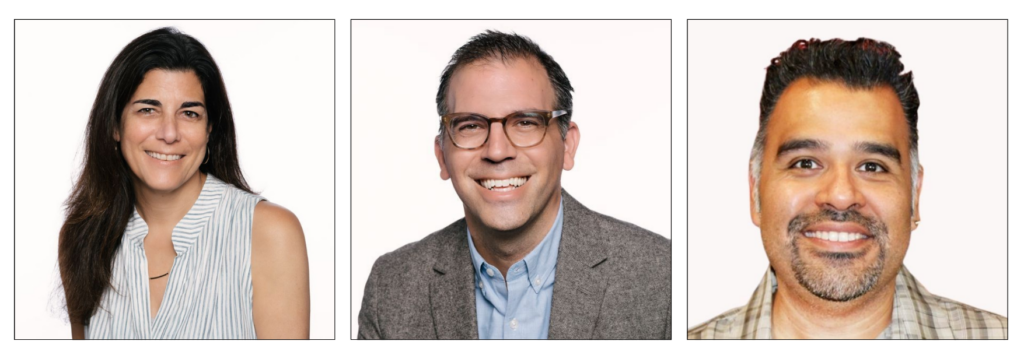
Sherry Berg (Director of Clinical Development), Dan Nieman (Vice President of External Affairs), and Jimmy Urizar (Vice President of Student and Community Services)
Please tell us about Para Los Niños’ mission and the mental health services you provide to immigrant communities, specifically young children.
Dan: Para Los Niños was founded in 1980. We are now in our 46th year of operations, and we are a holistic nonprofit serving children, youth, and families across East Hollywood, East LA, downtown, and the USC corridor – a community that is 99% Latino and predominantly working families. We operate early education centers, charter schools, and workforce development and family services programs, with mental health as the through line connecting all of it. Therapists and social workers are embedded directly in both the early ed centers and charter schools, providing a depth of integrated support that sets Para Los Niños apart.
Last summer’s immigration raids hit Para Los Niños differently than most organizations – affecting not just the families we serve, but staff as well, and fundamentally shaping how the work gets done. But at the core of it all is our drive to help children, youth, and families thrive, by whatever means necessary.
Sherry: My team consists of about 22-23 clinicians, a psychiatrist, nurse practitioners supporting medication evaluations, and BA-level staff handling targeted case management and rehabilitation services. We provide psychotherapy in the home, in schools, and in the community, wherever it’s appropriate and feasible.
We work very collaboratively with families and with whoever else is involved in their lives – schools, social workers, natural supports – whoever the family identifies as wanting to be part of the process.
With our Birth-to-5 work specifically, the approach is dyadic, meaning we work with both the caregiver and the child together. We’re really focused on helping caregivers understand their child, develop attunement, and navigate whatever is coming up. Often it’s the behaviors or developmental concerns that become the window – the entry point that lets us help a parent understand what their child needs and how to respond.
Para Los Niños serves children and families in Skid Row, Pico-Union, Boyle Heights, and Ramona Gardens – communities with high concentrations of immigrant families navigating real fear right now. How is the current climate around immigration enforcement showing up in the mental health needs of the young children you serve?
Sherry: Kids – especially the youngest ones – take their cues from the adults in their world. So if the adults around them are feeling anxiety, which is completely understandable right now, the children are feeling it too. In young children, that can look like fear, outbursts, tantrums, crying, clinginess, or sometimes withdrawal and shutdown.
We work closely with caregivers to help them buffer what spills over to their kids, but honestly, in the current climate of fear, that’s really hard to do. Children are picking it up everywhere – at home, in the community, from friends and extended family. So we’re not just supporting caregivers; we’re also supporting other adults who figure prominently in children’s lives. If it’s showing up in schools, we work with teachers to help them develop what we call a reflective lens, understanding what might be underneath the behaviors they’re seeing, rather than just responding to the behavior itself.
Jimmy: I’d like to uplift what Sherry is saying and add to it. Across our programs, we’re seeing the same thing and recognizing the impact on kids means we have to support caregivers too. Our family services team holds a range of DCFS and DMH contracts that allow us to actively engage adults directly. What we’re seeing among adults right now is increased isolation and anxiety, and that can manifest as anger or depression. It’s affecting their relationships with each other and with their children. So we’re tackling it on both ends.
We’ve also had to pivot in real ways to meet families where they are. When the raids started, we began seeing families isolating – not going out for groceries, not leaving home for basic necessities out of fear. We responded quickly, initially launching weekly food box deliveries to 125 families and then expanding to include household goods like laundry detergent and cleaning supplies, because families weren’t going out for any of it.
Has that improved? Slightly. But the fear is still very much there, even when it’s not dominating the news cycle. What carries in the community is word on the street. Someone spots ICE in the neighborhood, and families start asking again: Is it safe to go out? Is it safe to send my child to school? We’re still actively working to meet the needs of families living with that fear every day.
Sherry: I’d add housing to that as well. When people are afraid to leave their homes, many aren’t going to work, and for the population we serve, housing insecurity was already a significant issue. This has made it worse. We’ve been fortunate to secure some additional private grant funding to help support families with housing needs, but our capacity has limits.
Nearly 88% of the caregivers you serve read little to no English, and 95% of clients are Latino. What does it actually take to deliver culturally and linguistically responsive mental health care in communities like these — and where does the system still fall short?
Sherry: We’re really lucky here at PLN in that the majority of my team is bicultural and bilingual. A lot of our staff are from the community themselves. They’re here because they want to give back, and that passion and heart come through in the work. I also oversee our graduate student training program, which has been a real pipeline for bringing in clinicians who reflect the communities we serve.
That said, we do serve families – particularly in the Pico Union area – whose primary language is neither Spanish nor English, but an Indigenous language. So, that can be tricky. We’ve recently started using a HIPAA-compliant interpretation app called Boostlingo to bridge that gap when a provider and family don’t share a language. So, the majority of our families have been able to be matched with a provider who is able to provide the services needed in the language needed.
Jimmy: We also invest heavily in training. Sherry leads a lot of that work – continuously seeking out opportunities to build our clinical team’s capacity across all programs, including family services, youth, and workforce services. As we see new needs emerging, we ask: what do our clinicians need to know right now to meet this moment?
We’ve also had to innovate in how we deliver services. Families aren’t always able or willing to come to the clinic, so that might mean home visits, telehealth, or other accommodations. Whatever it takes to meet families where they are, in a way that feels respectful and accessible to them, we’re committed to finding it.
May is Mental Health Awareness Month, but for the families Para Los Niños serves, mental health stigma, language barriers, and fear of institutions can make it hard to ask for help in the first place. What does awareness actually mean in your communities, and what’s your message to a caregiver who isn’t sure whether their child needs support?
Sherry: Stigma around mental health has always been a challenge, and it’s only been compounded by everything happening right now. We’ve worked hard across our schools, community partners, and family services programs to destigmatize mental health support through parent groups, community talks, and outreach that helps families understand what these services actually are and that they’re here to help.
A lot of that happens through relationships and warm handoffs. We have a coordinator who goes to Union Rescue Mission (the only shelter on Skid Row that takes in children, youth, and families) weekly – just showing up consistently, getting to know families, being a familiar face. Our charter school social work teams do the same with kids and parents. Most of our referrals come through trusted partnerships and word of mouth, not advertising. When a neighbor or friend has had a good experience with us, that carries more weight than anything else.
But stigma remains a real and growing concern – especially now, when asking for help can feel risky in a climate of fear. We’re constantly working with partners to find new language, new entry points, and new ways to let families know we’re here.
Jimmy: I want to lift what Sherry said, because community collaboration is really where we see the most meaningful engagement. Through our Community Transformation Collective program, we’ve built neighborhood leadership groups run by community members themselves. That’s grown into a promotoras model in our family services work – community advocates recruited from the ground up, engaging neighbors and moving from local needs all the way to policy change.
One of the most powerful things to come out of these groups was organic: community members decided they wanted to tackle mental health stigma within their own neighborhoods. They started organizing seminars and events and invited us – not as leaders, but as guests and subject matter experts. They set the agenda, asked questions freely in their own language, without judgment. And the response has been strong enough that our team keeps getting invited back. When the community itself is driving the conversation around mental health, that’s when efforts to address stigma really take hold.
Para Los Niños has a specialized clinical track focused specifically on children birth to five, embedded within your Early Head Start and Head Start programs. Why is that integration — mental health support inside early education — so important?
Sherry: If a child has traumatic things happening in their life outside the classroom, they’re not going to be ready to learn. That’s why having a mental health and social-emotional lens embedded in our education programs isn’t an add-on – it’s vital.
In our Early Head Start and Head Start programs, we have mental health leads through the LA County Office of Education, alongside supports for disability, health, and nutrition. Our school social work team is embedded directly in the charter schools, and my department provides adjunctive clinical support across both early ed and charter settings. We also have graduate-level student clinicians who are part of this work. It’s a wraparound approach, hitting it from every angle.
The through line is helping teaching staff and administrators see behaviors as the tip of the iceberg. When a child is acting out or can’t focus, the behavior is the window – it’s an invitation to wonder what else is going on.
Jimmy: I’d add that this work equally encompasses supporting the adults, the caregivers. Helping them understand what they’re seeing in their child, and what to make of it, is just as important as working with the child directly. It’s okay not to know what the next step is. But, when caregivers have the right support to make sense of what’s happening, it strengthens their relationship with their child, and that relationship is ultimately what drives the child’s well-being, growth, and success in school and beyond.
Let me give a concrete example of what this looks like in practice. Say we’re working with a 9-month-old in one of our Early Head Start programs. That baby is probably learning to crawl, stand, or walk – an exciting developmental milestone. But for the parents, it can feel like everything is falling apart: the baby is fussy, not sleeping, not eating well. They know their child isn’t sick, but they don’t know what’s wrong.
What our clinical and family services teams can do is simply explain: when a baby is mastering a new physical skill, it’s developmentally normal to temporarily regress in other areas. They’re so excited about practicing this new ability that sleep takes a back seat until they’ve got it down. For a parent to hear that, to understand that this isn’t something they caused, is enormously normalizing. It shifts the experience from anxiety to support. That’s what both our clinical and family services teams do really well: helping parents understand their child’s development so they can show up for them with confidence rather than fear.
Dan: I also want to flag something that speaks directly to the funding landscape. During the Biden administration, we were awarded a federal School-Based Mental Health grant – funding specifically designed to bring more mental health services into the K-12 system and diversify the mental health profession. About a year ago, in summer 2025, the Trump administration terminated that grant.
We’ve been fighting to get it back ever since, as part of a 16-state lawsuit, working closely with the California Attorney General’s office. We’re recovering funding in small increments, but it’s an ongoing battle. I raise this because it’s a vivid example of what’s at stake: a program that makes complete sense – putting mental health support where kids already are – and we are literally in court fighting to make it a reality for the children and families we serve.
What does trauma look like in a two- or three-year-old — and how do you help caregivers and teachers recognize and respond to it when the child can’t yet put words to what they’re experiencing?
Sherry: When trauma is happening in a family or community, young children pick it up, cueing off the anxiety of the adults around them. In little ones, that can look like developmental regression, flat affect, sleep difficulties, tantrums, clinginess, or withdrawal. It can look a lot of different ways.
A core piece of our Birth to Five work is the concept of co-regulation – supporting the adult to get themselves grounded first, so they can then be the steady, safe base the child needs to regulate. Young children can’t always self-regulate; they need the adult to do it with them. That’s exhausting work, especially when the adult is carrying their own fear and trauma. So we spend a lot of time helping caregivers recognize their own cues – when they’re becoming elevated, what they need in that moment – so they can show up for their child.
Jimmy: That same principle extends to our staff. During last year’s raids, it wasn’t just families who were impacted; it was also our own staff and their communities. We’ve leaned heavily on our clinical leadership to support staff through that, shifting supervision conversations from productivity to genuine check-ins. When we can support the staff member, they can show up for the family.
Sherry: There’s this notion of ‘rupture and repair’ in clinical work, with littles and with olders. None of us shows up as our ideal selves every moment. What matters is the repair – and with young children, even before they have the words, we can model that. A hug, an acknowledgment, a moment of reconnection. That’s a life skill we’re teaching from the very beginning.
With potential Medi-Cal cuts looming, what’s your message to policymakers about what’s at stake for the youngest, most vulnerable children in LA if funding for community mental health is gutted? How can funders respond to this current crisis?
Sherry: What I’m seeing is that funding is shifting in ways that concern me deeply. After COVID, we had more latitude to support adults directly, and that has made an enormous difference for children. But now we’re being pushed back toward a child-only focus, and I worry we’re going backward. If the adults aren’t okay, the children aren’t going to be okay. You can’t support one without the other. Our ultimate goal is to put ourselves out of business – not by creating more need, but by building adults up so they can be that person for their kids. Funding needs to reflect that systemic reality.
Jimmy: The Medi-Cal picture makes this even more urgent. We’ve seen what happens when more people have access to behavioral health services – they use them. Now we’re seeing people dropped from Medi-Cal or facing costs they simply can’t absorb. For many of the families we serve, it’s groceries and rent versus insurance, or insurance versus a copay they can’t afford. Access disappears in real, practical ways. So, for policymakers, the question has to be: how are you opening doors, not closing them?
Dan: And, we have to reflect that everything is connected. A mental health issue is an immigration issue is a workplace issue is a housing issue is a food insecurity issue. It’s all interconnected. In funding and policy, we have to think about the whole child and the whole family.
Sherry: I will say, what gives me hope – and honestly makes me a little emotional thinking about it – is the people. The teams doing this work every day are extraordinary. They see the beauty in child development, and they help parents and teachers see it too. That matters so much.
There’s a saying we share with kids during hard times: look for the helpers. Right now, I’m looking for the helpers. And they’re there – showing up, fighting for families, refusing to stop. That’s what brings me to work every day, and that’s what keeps me going.